

January 12, 2026
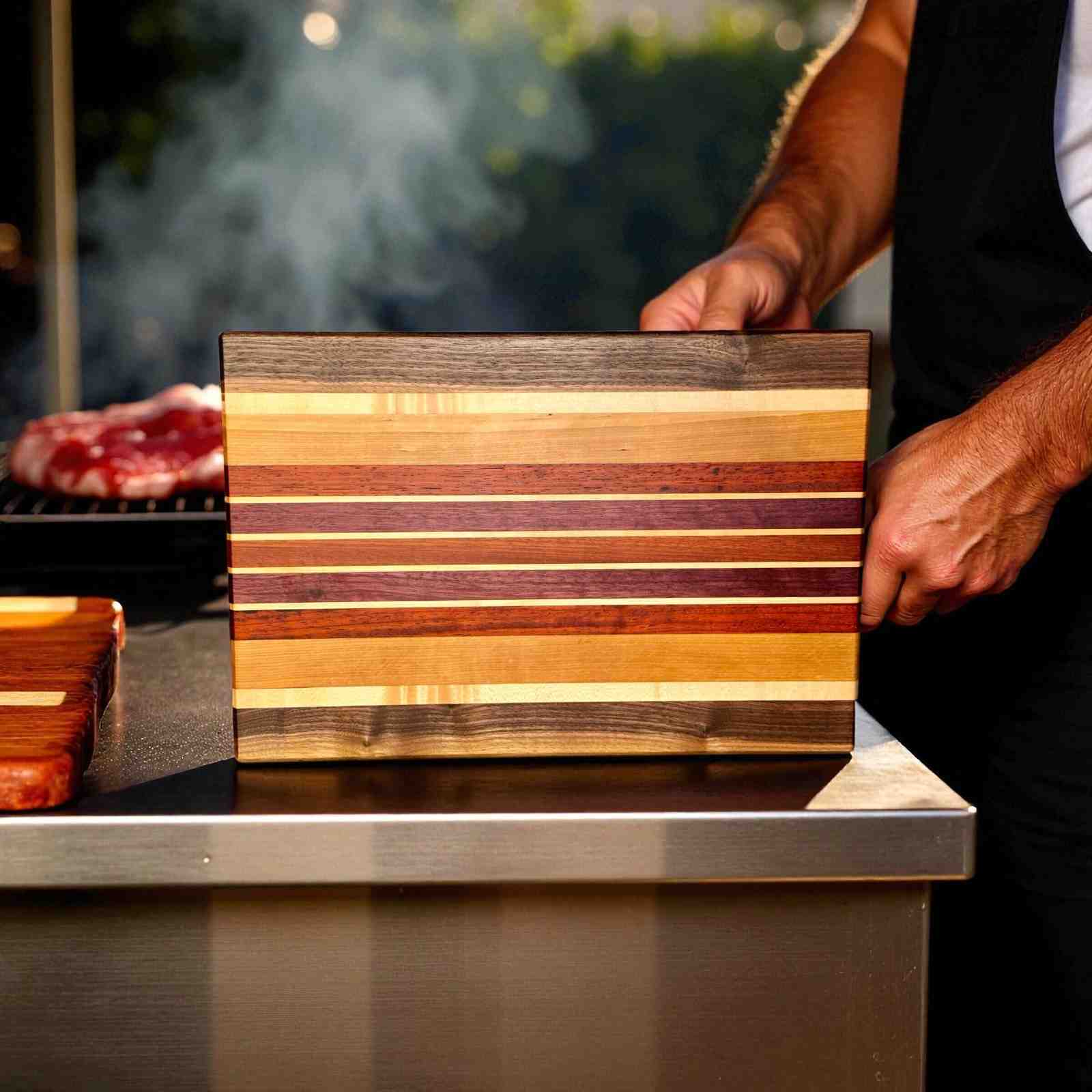
We spend a lot of time talking to people about cutting boards, and most of them come to us with the same complaints. Their boards looked fine at first, but over time, they started showing deep cuts, rocking on the counter, or just feeling rough and worn out.
In our experience, these problems usually aren’t about poor care. They come down to how the board was made. A lot of store-bought boards just aren’t built for everyday cooking. That’s why so many of our customers choose bespoke kitchen cutting boards in Lawrenceville or around Georgia after their old boards failed.
Here are the most common problems we see with cutting boards:
One of the first problems we notice is deep knife marks. These aren’t just scratches. They turn into grooves that hold food and moisture and make the board harder to clean.
This happens a lot with softwood, bamboo, and thinner boards. The wood just gives way under the knife. When we build bespoke kitchen cutting boards in Lawrenceville, we use hardwoods that can take regular chopping without breaking down right away.
A cutting board that rocks or shifts while you cut is not just annoying. It is unsafe. We see warping when boards are made from poorly dried wood or built too thin to handle moisture.
Most factory boards are rushed. Our bespoke handcrafted chopping boards near Holly Springs are made from properly dried hardwood and built thick enough to stay flat, even after years of regular washing and use.
Splinters are another big reason people replace their boards. They usually show up along the edges or handle cutouts, especially on softer woods.
When we make bespoke serving and cutting boards in Cumming, we take extra time shaping and sanding the edges. That step gets skipped on mass-produced boards, and it’s why so many of them start feeling rough after a short time.
We also hear from people who say their knives seem to get dull quickly. That often comes down to the cutting surface.
Boards that are too hard or poorly built can be rough on knives. Hardwood boards done right are a lot easier on your blades. That’s one reason people choose bespoke gourmet cutting boards in Lawrenceville when they cook often and care about how their tools perform.
A lot of cutting boards fail simply because they’re the wrong size. Too small and everything spills off. Too big, and the board is awkward to move and clean.
With bespoke handcrafted chopping boards across Holly Springs, we size boards to fit real counter space and how someone actually cooks. That makes a bigger difference than most people expect.
Smells and stains usually come from deep cuts and open grain that hold moisture. Once that starts happening, it’s hard to fix.
Using the right hardwood and finishing it properly helps prevent this. Our bespoke serving and cutting boards in Cumming and across Georgia tend to stay cleaner with basic care because the surface isn’t breaking down as fast.
Most cutting board problems come back to the same thing. A lot of boards are made quickly and cheaply, not for long-term use. Thin boards, soft woods, and rushed finishing only last so long.
When we build bespoke gourmet cutting boards in Lawrenceville, we focus on avoiding these issues from the start. The goal is a board that stays flat, holds up to daily use, and feels good to work on.
A cutting board should be something you rely on every day, not something you keep replacing. That’s what we try to build.